
Small business SEO is often misunderstood as a scaled-down version of enterprise SEO. In reality, it is a different strategic discipline. Small businesses do not usually have national brand recognition, large content teams, or the ability to absorb long ranking timelines without cash flow pressure.
At a glance
Small business SEO is its own discipline, not a cut-down version of enterprise SEO. This article covers technical basics, helpful service pages, local search, earning links on a small budget and realistic measurement. Made for owners who need organic visibility that pays off without a big team or budget.
What they do have is proximity to customers, deep knowledge of their service, and the ability to move faster than larger organisations. When used properly, those advantages can translate into strong organic visibility, especially at the local and intent-driven level.
Why SEO matters more for small businesses than paid ads alone
Paid advertising can deliver speed, but it is constrained by budget. When spend stops, traffic stops. SEO operates differently. Once rankings are established, they can continue delivering traffic without paying per click. This long-term compounding effect is one reason SEO leads are often cited as higher converting than outbound methods.
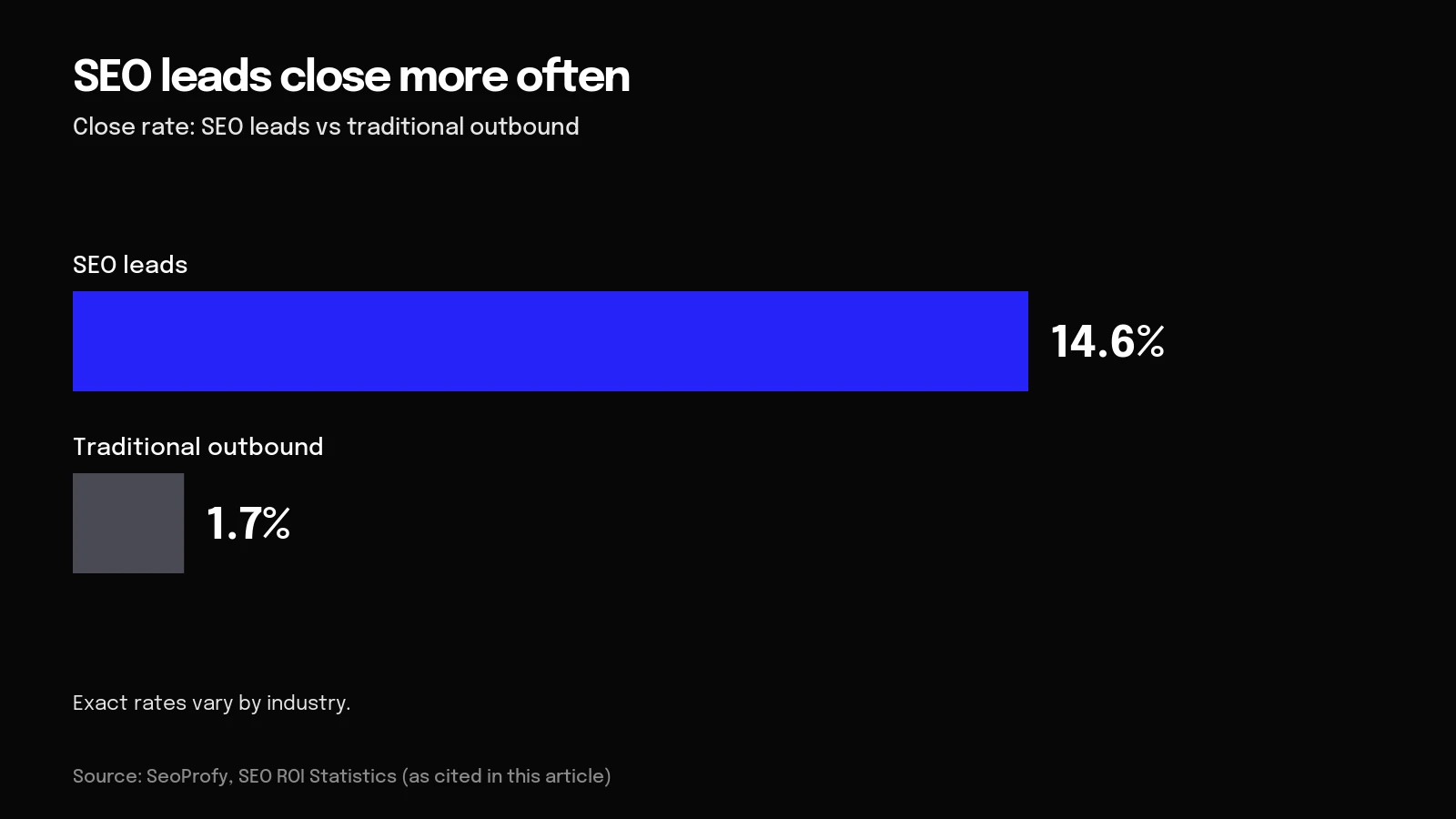
Industry data suggests SEO leads close at rates around 14.6 percent compared to roughly 1.7 percent for traditional outbound marketing. While exact rates vary by industry, the directional insight is clear. Search traffic tends to carry strong intent because users are actively looking for a solution.
For a small plumbing company, accounting firm, dental clinic, or marketing consultancy, that intent is powerful. Someone searching “emergency plumber near me” or “tax accountant for small business Perth” is not casually browsing. They are problem aware and solution seeking.
The foundation: Technical clarity and crawlability
Before content and backlinks matter, search engines must be able to access and understand your website. Google’s Search Essentials documentation outlines core technical requirements, including crawlability, indexability, and mobile friendliness. Many small business sites struggle here, not because of complexity, but because of neglect. Broken internal links, duplicate service pages, slow load times, and missing metadata quietly undermine performance.
Page speed and Core Web Vitals
Core Web Vitals continue to play a role in page experience evaluation. While they are not the sole ranking factor, poor performance can correlate with traffic loss during quality-focused updates.
It requires compressing images, using modern formats such as WebP, reducing unnecessary scripts, and ensuring hosting quality is adequate.
Site structure
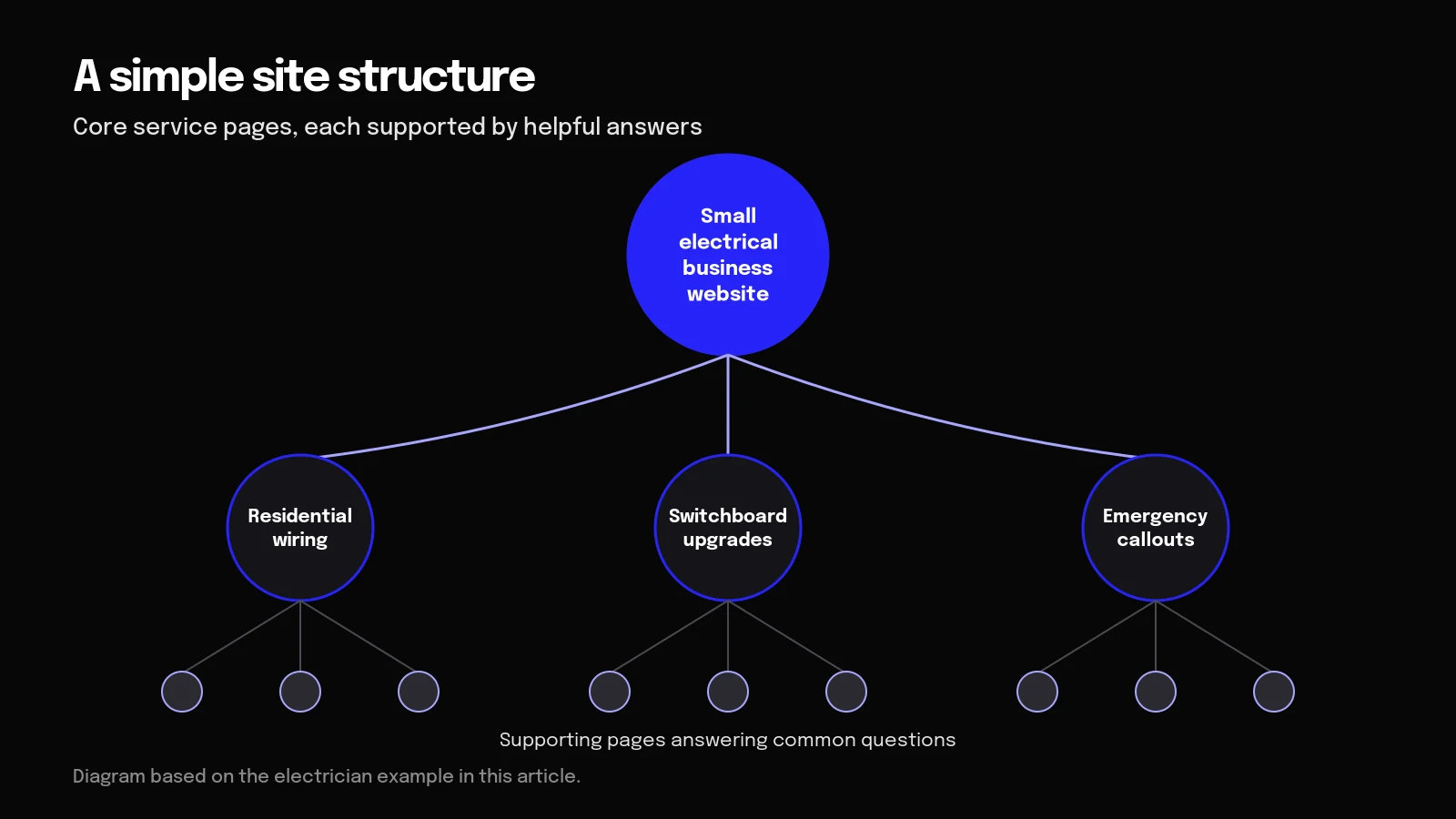
Structure also matters. Logical site architecture helps search engines understand relationships between pages. A small electrical business might structure its site around core services such as residential wiring, switchboard upgrades, and emergency callouts, with supporting pages answering common questions.
Content strategy for small businesses: Depth over volume
Small businesses often assume they must produce dozens of blog posts to compete. The evidence suggests otherwise. Large-scale correlation studies, such as Semrush’s analysis of 300,000 positions, consistently show that relevance and intent alignment are stronger indicators of ranking performance than sheer content quantity.
For small businesses, this means focusing on cornerstone service pages and tightly related supporting content. A physiotherapy clinic does not need to publish daily news commentary. It needs authoritative pages on common injuries, treatment processes, recovery timelines, and what patients should expect. Those pages should demonstrate experience, answer practical questions, and include clear calls to action.
Match the page to the search
Search intent is central.
Informational
“how long does a sprained ankle take to heal” requires educational depth.
Commercial
“best physio in Perth” requires trust signals, reviews, credentials, and clear differentiation.
Transactional
“book physio appointment today” requires frictionless booking systems and mobile usability.
Local SEO: The small business advantage
Local search is where small businesses often have the clearest edge. Google’s local ranking factors are typically summarised as relevance, distance, and prominence. Surveys such as the Whitespark Local Search Ranking Factors report highlight the continued dominance of Google Business Profile signals, reviews, and on-page optimisation in influencing local pack visibility.
This is significant because it levels the playing field. A well-optimised local business profile, complete categories, regular updates, consistent NAP details, and actively managed reviews can dramatically influence visibility. Review recency has increased in importance in recent surveys, suggesting that ongoing engagement matters more than static accumulation.
Location-specific content further reinforces local relevance. Instead of generic service pages, a small landscaping company in Perth might include guidance on soil types, climate considerations, and seasonal maintenance relevant to Western Australia. These signals help search systems associate the business with its service area while also providing genuine value to potential customers.
Backlinks and authority without large PR budgets
Backlinks remain a significant ranking signal, though modern evidence consistently shows quality and relevance outweigh quantity. Semrush’s 2024 ranking factors study reported correlations between referring domains and higher positions in the range of 0.22 to 0.30 for quality links.
Local citations, partnerships, sponsorships, industry associations, and guest contributions to relevant publications can build meaningful authority. A small accounting firm contributing insights to a local business chamber blog may gain both referral traffic and contextual authority. The key is alignment. Links from unrelated directories or low-quality networks offer little sustainable value and can introduce risk under Google’s spam policies.
Digital PR at a small scale can also work. Publishing a local market report, sharing original data from customer surveys, or commenting on industry changes can attract coverage. The important factor is that the content is genuinely useful or newsworthy, not manufactured purely for link acquisition.
Measurement and realistic expectations
One of the most common frustrations in small business SEO is timeline uncertainty. While exact timing varies, multiple industry surveys suggest that noticeable ranking improvements often begin within three to six months, with more substantial commercial impact emerging between six and twelve months when consistent effort is applied. This does not mean nothing happens earlier. It means SEO compounds.
Small businesses should measure more than rankings. Google Search Console provides data on impressions and click-through rates, showing whether visibility is expanding even before conversions spike. Google Analytics or GA4 can track enquiries, calls, and booking events. Early months often focus on technical correction and intent alignment. Later months build authority and consistency.
Common small business SEO mistakes
Over-optimisation remains common. Keyword stuffing, duplicate suburb pages with minimal variation, and thin blog posts created purely to target phrases can undermine credibility. Modern research indicates that keyword density itself shows little consistent correlation with ranking position, with some analyses reporting average densities as low as 0.04 percent in top results, reinforcing that contextual relevance matters more than repetition.
Another mistake is ignoring E-E-A-T. Google’s guidance emphasises experience, expertise, authoritativeness, and trustworthiness as key considerations in quality evaluation. For small businesses, this means showing real credentials, clear ownership, customer testimonials, and transparent policies. Trust signals such as secure HTTPS, accessible contact details, and accurate information support both user confidence and search system evaluation.
Finally, many small businesses treat SEO as a one-off project. Core updates and competitive movement require ongoing refinement. Google’s documentation on core updates reiterates that ranking changes reflect overall quality evaluation and that sustained improvement requires continued focus on helpful content rather than quick fixes.
The strategic mindset for small business SEO
Small business SEO is not about outspending larger competitors. It is about out-serving them in clarity, specificity, and local relevance. Focus on a technically sound site, deeply useful service pages, consistent local signals, and ethically earned authority. Build content clusters around real customer questions rather than generic keyword lists. Reinforce credibility through transparent identity and evidence of experience.
For practical SEO support sized to a small business, contact us or email hello@thedigitalmarketingconsultants.com.au.